
The Current Owner Fields on a Pocahontas County Record
The Assessor card is the first place to look. It lists the owner entry plus the parcel context that confirms it. That includes the owner name, mailing address, physical situs, last sale information, and deed reference. WV Assessment Search lets you query by owner, street, parcel, map, mailing address, and legal description. You can also search by deed book and page. Those fields describe the record as it stands in that system. A brand-new transfer may not appear yet. The newest recorded deed at the Clerk's office is the cross-check that settles it.
| Owner field | Name or entity shown on the assessment roll |
|---|---|
| Mailing address | Address used for mailed notices; may be away from the parcel |
| Situs / physical address | Location label used to find the property |
| Last sale date | Sale-history field; compare its timing with the assessment snapshot |
| Deed book and page | Reference that can lead to the recorded instrument |
| Legal description | Land description used to verify the deed and parcel match |
The owner of record is not always the person living there. Mailing and situs addresses can differ. The map viewer's first display may show only one owner. Treat a billing address as a correspondence detail, not proof of residence. Compare the Assessor card with the deed itself.
Pocahontas County Owner of Record in WV Assessment
The statewide assessment search splits its data into separate fields. These cover owner name, mailing address, street, full parcel ID, map, parcel, and deed book and page. A Prior Ownership option sits alongside an appraisal and sales mode. Both can hint at an earlier transfer. They are clues, not proof. The portal states no exact refresh cadence beyond the county's assessment date. An owner field may lag behind a recording. Open the parcel and save its legal description before trusting the displayed name. The WV Assessment Search page shows the Assessor's search choices.
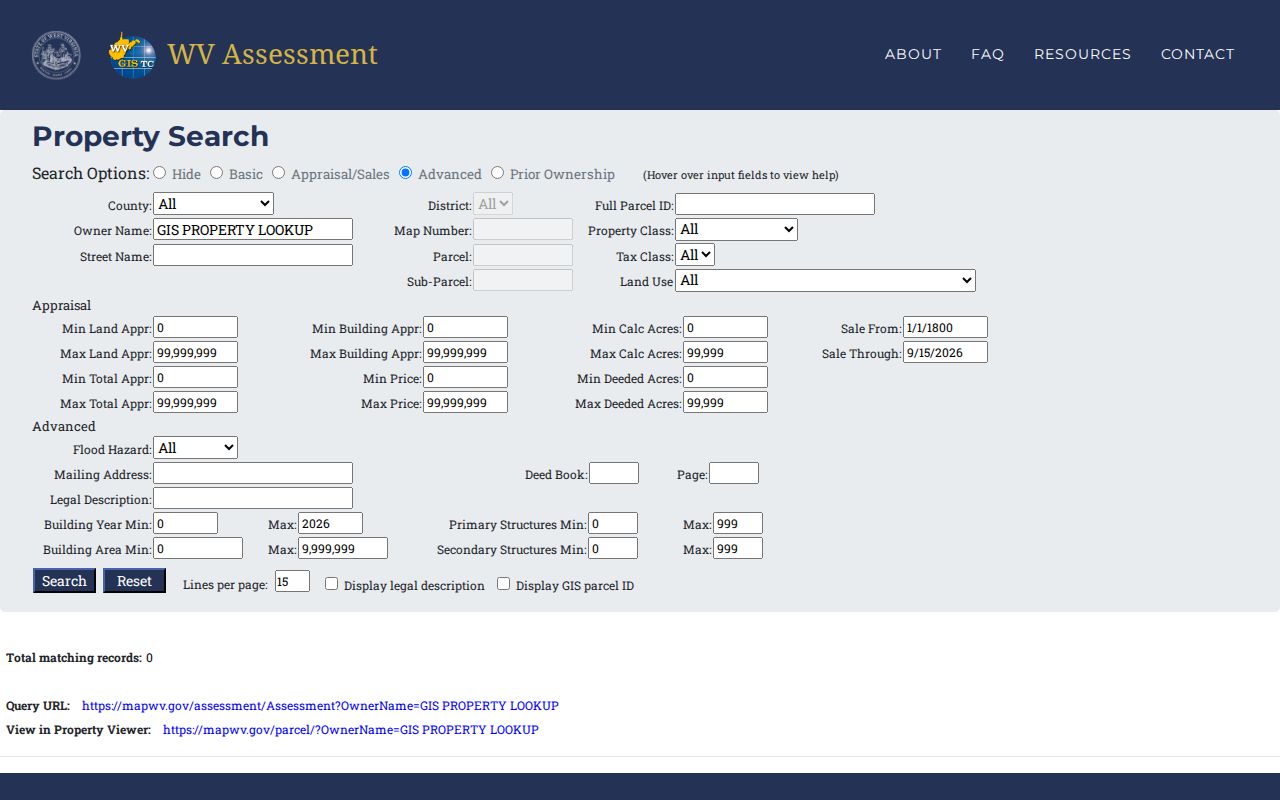
These filters can link a current owner entry to a sale record. The Clerk's recorded instrument is still the transfer evidence.
Pocahontas County Current Owner Records After July 1
The county tax-map notice dates the 2026 assessment snapshot to July 1, 2025. For later transfers, it points users to "View Mapcard (Sales History)." That gap matters. A parcel can carry a newly recorded deed. Its roll view may still show an older owner. Compare the dates before concluding either record is wrong.
For a sale after July 1, open the mapcard and note its sale information. Then search the County Clerk index for the matching deed. The deed's recording date and legal description should line up with the parcel. Remember what each record is. The annual assessment view is a tax record. The newest deed confirms the recorded transfer.
Mailing and Situs Fields for a Pocahontas County Current Owner
The Assessor keeps a Mailing Address search field separate from the street or situs field. WEB Tax Inquiry shows a Billing Address line as well. These entries point to different things. One marks the parcel's location; the other is where correspondence goes. The statewide viewer uses E-911 addresses only, ruling out rural routes and PO boxes. An address search can fail here. Call for the owner or parcel key instead. That is a better path than a new guess about who owns the land.
Label every address in your notes. Never infer occupancy from a mailing address. A postal town does not equal the municipal boundary. Use the physical address to locate the map parcel. Use the deed description to confirm its land.
Confirming the Present Pocahontas County Owner
Start with the roll. Then let the latest recorded instrument confirm any recent transfer. Keep the parcel description and deed reference in view. That way a deed for a neighboring tract or a similarly named party is not mistaken for the current owner. The July 1 assessment date and the deed recording date answer different questions. That is why both matter.
- Open the Pocahontas County parcel in WV Assessment Search and record the owner, mailing and situs fields.
- Use deed book/page or the grantee name to find the newest County Clerk instrument.
- Compare the deed's grantee and legal description with the parcel card.
- Check the mapcard sales history for a sale after the roll's July 1 date.
- Owner of record
- The name or entity entered on the assessment roll.
- Assessment roll
- The Assessor's parcel and value record for a tax year.
- Situs address
- The physical location label for the parcel.
- Recording lag
- The period when a deed is recorded but the next roll display has not caught up.
Entity Names on the Pocahontas County Owner Roll
The Assessor sometimes shows an LLC or another business as the current owner. Search the Secretary of State Business Organization Search for the matching entity name. Its advanced portal offers county and type filters. Use that result to understand the business record itself. It cannot identify an unrecorded individual interest or replace the deed. A trust or estate may call for the named fiduciary. The instrument may also be needed to explain how title is held.
Record the name exactly as each source prints it. A stray punctuation mark can send the search to the wrong entity. A similarly named company can do the same. The County Clerk's instrument supplies the grantee name and legal description. The business portal is supplemental context only.
Owner Display Limits in Pocahontas County Parcel Detail
The statewide WV Property Viewer can show an owner in its first parcel result. That display may list only one owner. Open parcel detail before treating it as complete. Compare the Assessor card and the deed as well. The viewer also supplies the physical address, geometry, and building or appraisal fields, which help confirm the right parcel.
A map label is an efficient way to move from geography to an assessment record. It is not the full list of legal parties. If the deed names co-grantees, read the instrument itself. When current ownership truly matters, rely on the newest recorded transfer and verify that its legal description matches the parcel.
Tax Class Is Not Proof of Pocahontas County Ownership
Homestead exemption, farm-use valuation, and managed-timberland rules all sit with the Assessor. West Virginia fixes July 1 as the date that captures ownership, use, and value for the coming calendar year. The assessment system shows classes and appraisal fields. A homestead tag can explain a tax bill. So can a use designation. Neither one replaces the deed, though, and neither should stand alone as proof of who owns a Pocahontas County parcel today. Roll entry, tax ticket, and deed sometimes disagree. When they do, compare dates, parcel keys, and purpose. The Assessor can point to the parcel and its current roll entry, while the Clerk's newest deed confirms any recorded transfer; this page stays with the present owner record rather than rebuilding the older chain.
Address Confidentiality in Pocahontas County Owner Records
West Virginia's Address Confidentiality Program gives qualifying victims of domestic violence, sexual assault, stalking, or human trafficking a substitute address with mail forwarding. Applications go through an approved victim-service assistant. Participation runs for four years. A public owner search should never bypass that shield. It should never expose a private address. The Secretary of State's ACP page explains who qualifies and how the substitute address works.
Use the parcel and deed, not a protected address.
What the Current Owner Record Does Not Show
An assessment card is not a title opinion. A displayed owner name also fails to prove who lives at the address. Co-owners, trust interests, and other beneficial relationships may go unlisted. The deed names the grantee. Its legal description matches the deed to the land. For a recent transfer, the newest recorded deed beats the annual roll as evidence.
Lawful use. Use the owner field for a property record question or ownership diligence. Do not use a name or address to stalk, harass, threaten or harm anyone.
Put three records side by side for a recent purchase. Line up the deed's date, instrument reference, and grantee. Then check the Assessor's owner-of-record entry. Check WEB Tax Inquiry for the billing name. Each system answers a different question: the Clerk records the instrument, the Assessor keeps the annual parcel roll, and WEB Tax Inquiry tracks bills and payments. The county's July 1 assessment snapshot explains a common lag. A deed can show a new grantee first. The standard roll catches up later. If an online result looks thin, take the legal description and map-parcel to the Clerk's land-record index and ask whether a newer instrument has been indexed. Request a copy by book and page or document type, following the Clerk's current instructions, if a record stays murky. A name in an owner field proves no residence.