
Instrument Categories in Pocahontas County Deed Records
The Clerk's land-record index reaches well past ordinary conveyance deeds. One index can hold deeds of trust, liens, judgments, releases, cemetery deeds, church-trustee instruments, restricted military discharges, foreclosure trustees' reports of sale, plats, assignments, agreements and affidavits. Each label carries a different legal weight. A deed records a transfer. A deed of trust or lien records a claim or security interest. A release shows that an indexed claim was discharged. A plat maps the lots in a subdivision. The category helps, but the instrument itself controls the rights it creates.
| Deed Type | What It Does | Common Use |
|---|---|---|
| Deed | Recorded transfer instrument | Trace grantor and grantee, then compare the legal description |
| Deed of trust | Security instrument associated with a loan | Check later releases or assignments in the index |
| Lien or judgment | Recorded claim affecting a party or property | Read the document type and follow any release entry |
| Trustee's report of sale | Foreclosure-related sale report in the clerk categories | Confirm the underlying instrument and later deed |
| Plat, assignment or affidavit | Lot layout or supporting land-record filing | Use the legal description and book/page to connect it |
A deed is not a deed of trust. Neither one is a lien or a release. All four can sit in the same index, though. A careful Pocahontas County property search separates a true transfer from an encumbrance. It then reads the instrument for its parties, land description and purpose. Treat the category list as a map of the Clerk's holdings. It is not a statement of what any single filing legally does.
Online Pocahontas County Deed Records and the Unknown Cutoff
The Clerk's site connects to WV Land Records. It also links to a separate county image-search endpoint. A notice on the county tax-map page confirms that deeds are now available online. What the county does not publish is a starting year for the index. Whether every image is open, and what a copy costs, also go unstated. So treat an online result as a starting point, not a complete history of the tract.
The Pocahontas land-record index page lists the filing categories and links to search access. Run the current owner first. Then step back through prior grantors. Note each book and page along with the instrument type. When an older tract drops out of the index, ask the Clerk whether a deed book or record-room volume carries the chain further.
| Index field or mode | What was verified | Search caution |
|---|---|---|
| Instrument category | Deeds, deeds of trust, liens, releases, plats, assignments, affidavits and related classes | Landing-page categories are not the complete dropdown list |
| Party / grantor / grantee | Party-name search is expected by index context | Exact syntax and partial-name behavior were not stated |
| Book and page | Clerk request instructions use this reference | Pair it with the document type |
| Date or year | Field and coverage start were not located | Ask the Clerk about the older span |
| Parcel or address | Not located on the inspected landing page | Cross-reference through assessment and GIS |
| Search and reset controls | Live endpoint was inaccessible in the research pass | Do not claim unverified interface behavior |
The notice links to a separate Pocahontas County deed and image-search endpoint.
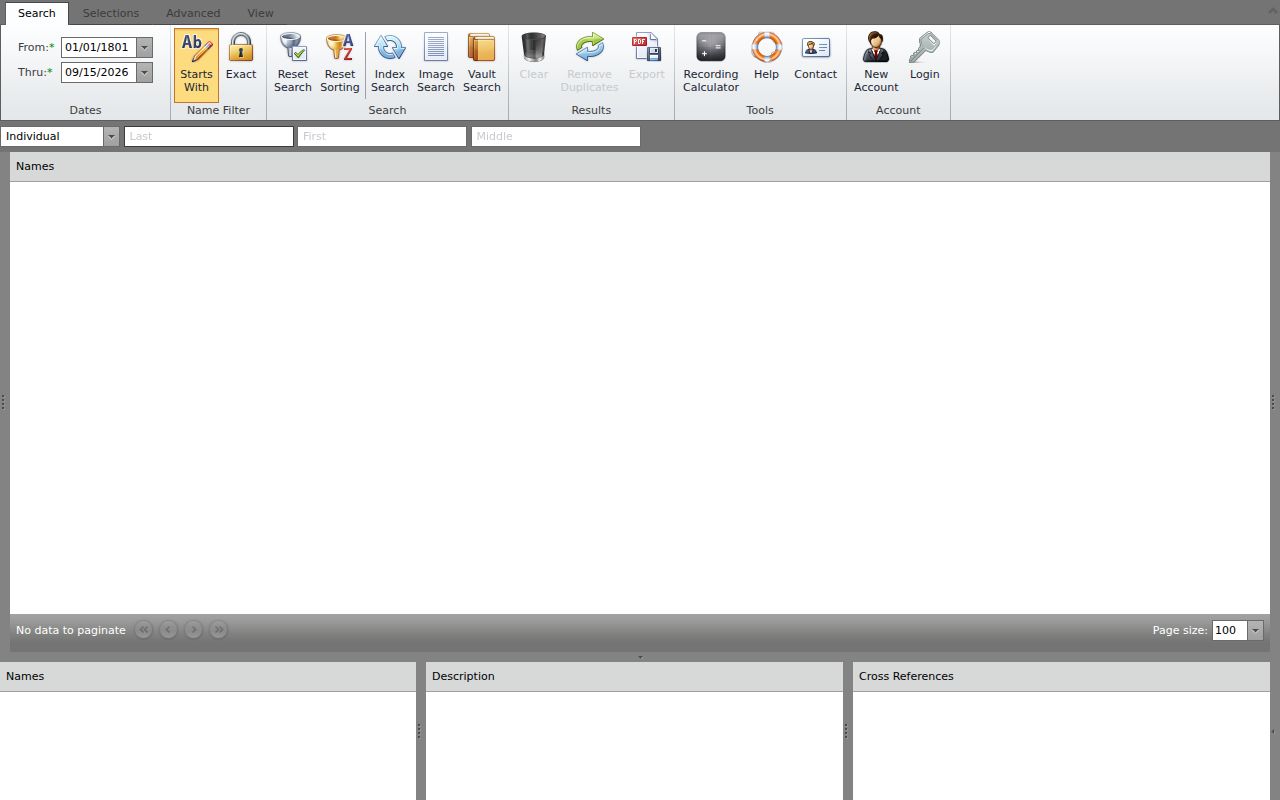
The endpoint is one access path among several. Confirm index coverage and any image charge directly with the Clerk.
Requesting a Copy from Pocahontas County Deed Records
The County Clerk sits at 900 C 10th Avenue, Marlinton, WV 24954. The official contact page lists Melissa L. Bennett, phone 304-799-4549 and fax 304-799-6947, with public hours Monday through Friday, 8:30 a.m. to 4:30 p.m. The request page asks for book and page, document type and a delivery choice. Payment runs through a linked state card service. Documents can go out by mail, email or fax, though vital and certified records are mailed only.
The County Clerk's own site carries the current request details. A separate land-record page shows 304-799-6063, so check the official contact page to reconcile phone numbers before calling. The Clerk publishes no fee schedule for online deed images, so ask about copy costs when you place the request.
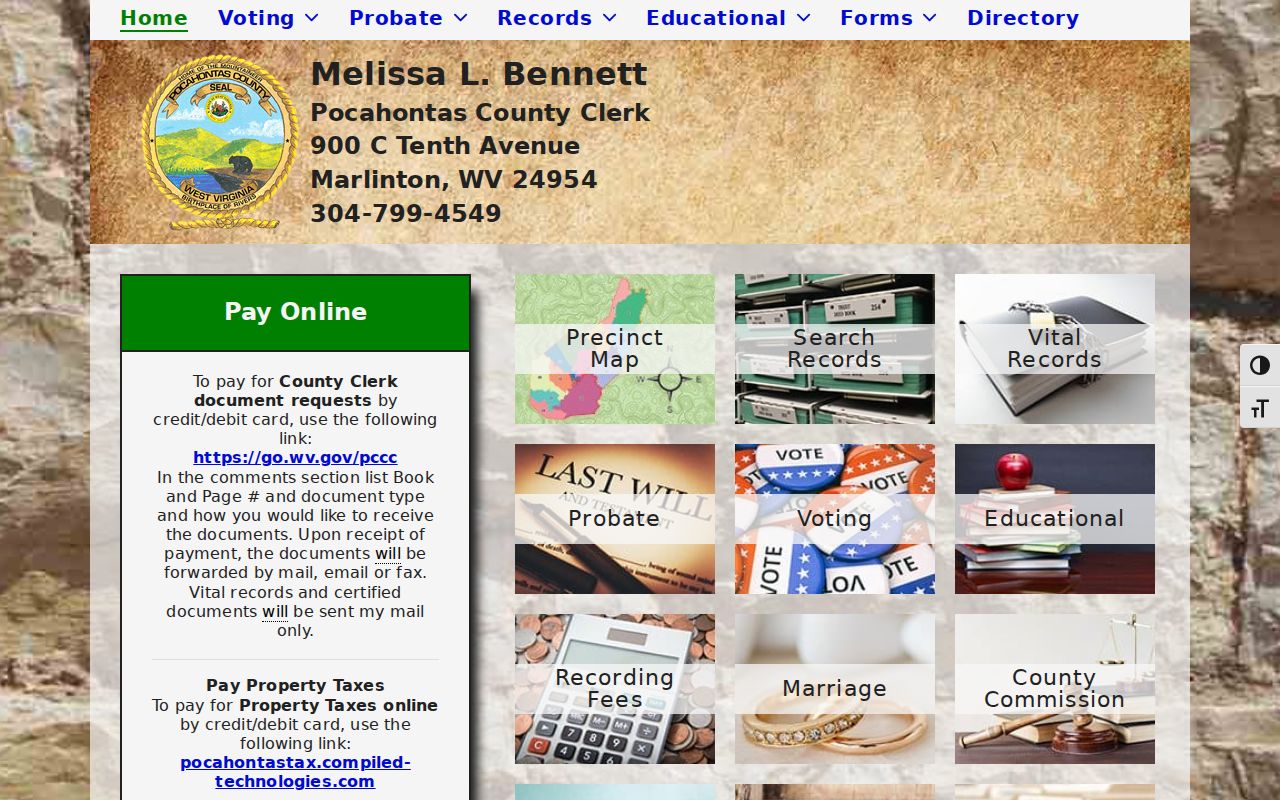
Give the clerk more than a book and page. A party name and parcel description help staff separate similar entries.
Restricted and Specialized Pocahontas County Filings
Some categories carry special limits. Military discharges are marked restricted. Cemetery deeds and church-trustee filings sit in the index alongside them. Inclusion does not guarantee open image access. Respect any privacy restriction the Clerk flags and ask which lawful route applies. Cemetery deeds can illuminate land history. Church-trustee entries may describe property held for an organization rather than a private household.
The index also holds foreclosure trustees' reports of sale, assignments and affidavits. A foreclosure report can point toward a later conveyance. It is not itself the deed transferring title until you review the instrument that follows. An assignment can move a recorded obligation to a new party. The parcel's owner of record stays the same. So record type, party role and parcel description all deserve attention.
West Virginia UCC Searches Are Separate from Pocahontas Deed Records
A Secretary of State UCC search is not the County Clerk's deed index. UCC filings cover secured transactions and related business records. Deeds, plats, liens and releases tied to Pocahontas County land belong to the county recording system instead. A UCC result might matter for a business or fixture question. But it cannot replace a deed or prove who owns a parcel.
The state designates online searching as the only UCC route after February 27, 2018. Published charges run $10 for the initial search. They also include $1 per page and a $3 portal fee. The Secretary of State UCC instructions lay out the search process and those fees.
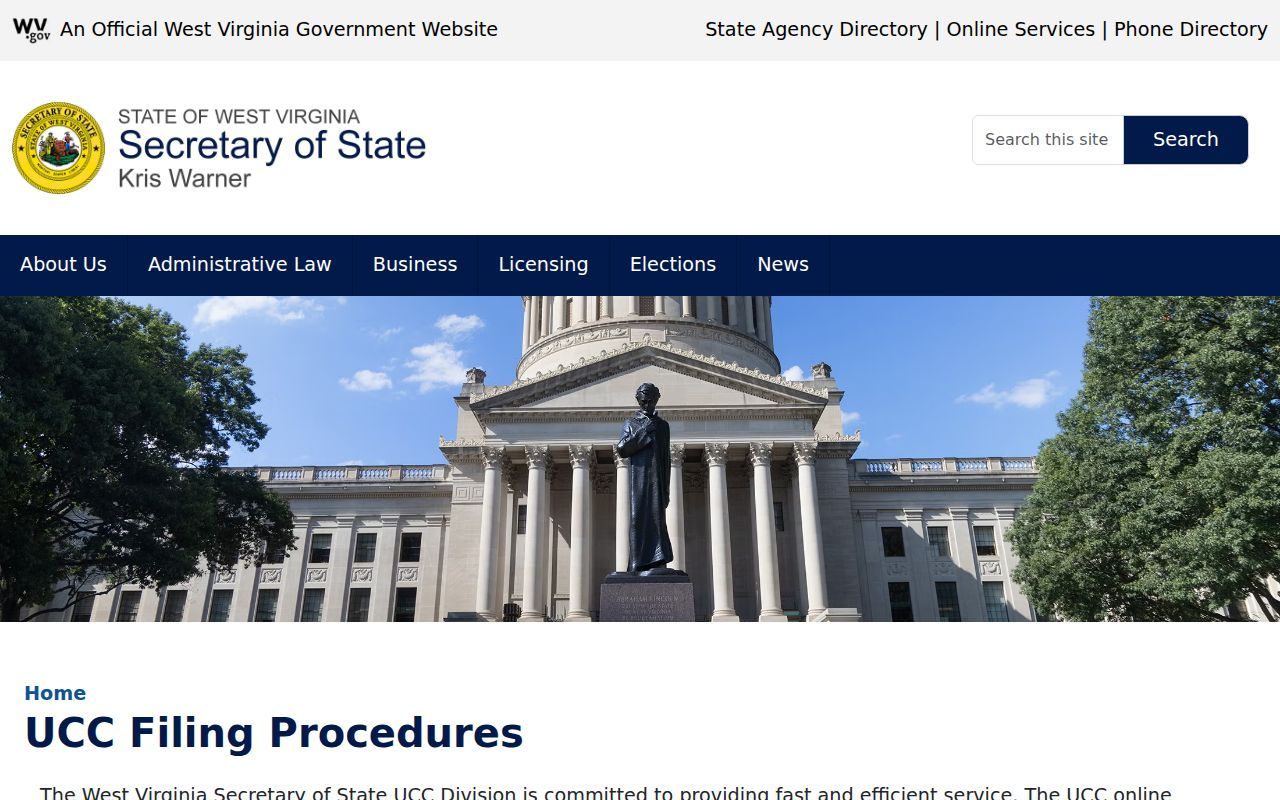
Keep this statewide business-filing path separate from a Pocahontas County deed request and its book and page reference.
Tracing Parties in Pocahontas County Deed Records
Party names are the thread that runs through Pocahontas County deed records. The land-record landing page lists instrument categories. It does not spell out exact search syntax. It does not cover partial-name behavior or how far back the online dates reach. Treat a grantor/grantee index as a set of leads. The grantee receives an interest. A later instrument may name that same party as grantor. One sale often unlocks the next link in the chain of Pocahontas County property records. The legal description inside the document is the constant. Search spelling variants and entity names carefully. Never treat an index summary as the deed's actual text.
- Start with the newest deed reference on the Assessor card or a known grantee name.
- Read the instrument for its grantor, grantee, date and legal description.
- Search the prior grantor as an earlier grantee, keeping the land description in view.
- Ask the County Clerk how far the online images extend; the inspected sources do not state a cutoff year.
- Grantor
- The party shown as making or conveying the stated interest.
- Grantee
- The party shown as receiving the stated interest.
- Chain of title
- The sequence of recorded instruments used to trace interests in the same land.
- Book and page
- A clerk reference used in document requests; confirm the matching instrument type.
Pocahontas County Deed Records and Recorded Plats
Plats sit among the County Clerk's indexed land-record categories. A plat can lay out lots or a whole subdivision. The deed carries the legal description. That description identifies the land actually conveyed. When an old instrument omits a street address, search the plat name or the deed reference instead, then compare the map, parcel identifier, acreage, and written description rather than trusting a neighborhood label alone.
Pocahontas tax maps can help you locate the parcel. The county's own disclaimer says the mapped lines are not a valid survey plat. A tax map is a reference layer. It is not the legal source of a boundary. If a lot's shape or access matters, obtain the recorded plat and consult a survey professional. A deed index entry tells you which document to request, but it cannot settle the physical location by itself.
When Older Pocahontas County Deed Records Are Not Online
No official start year for online deed indexing appears on the county's site. Older paper and microfilm series go undescribed too. That gap is worth keeping in mind. If the web index stops partway through the chain, contact the Clerk about deed books and courthouse record-room holdings. Do not copy a cutoff year from another county. The courthouse archives Pocahontas County deed records. The clerk can explain the local volume sequence.
For a precise request, give the tract's legal description, a known party, and any book and page already found. Splits and combinations complicate things. An older deed may describe acreage and adjoining owners rather than a modern street address, so a parcel number can outlast an address. Historical newspapers and library sources can help locate a name or event, yet a source clue never replaces the recorded instrument itself.
How to Request a Copy from Pocahontas County Deed Records
The County Clerk's official page links to an online land-record index. It also states that Pocahontas County deed records are now available online. Copies needing staff handling follow document-request instructions. Put the book and page, the document type, and your delivery choice in the request comments. Payment runs through the linked state service. The clerk page describes mail, email, and fax delivery. Vital and certified documents go out by mail only. No published service charge for a deed image appears on the page, so confirm the fee on the current payment screen or call the office before sending money.
Recorded, not guaranteed. The Pocahontas County deed index points to instruments the Clerk recorded; it does not establish that title is clear or reveal every unrecorded interest. Review the deed and use a title professional for a transaction.