
Starting a Pocahontas County Property Records Search
Match the search tool to what you already know. WV Assessment Search takes owner, street, parcel, and legal-description fields. The Pocahontas tax maps viewer answers where a parcel sits. The County Clerk land-record index is where a transfer instrument is recorded. Marlinton serves as the county seat. Several custodians sit within one courthouse trip. The portals stay separate, though. A Pocahontas County property records search is a path between records. It is not a single master file.
For a house, begin with the street address. The assessment result should give you the owner name and mailing address. It should also give the district, map, and parcel identifier. The legal description comes with it too. Deed book and page appear there as well. Write all of it down. Then compare that result against the newest deed and the tax inquiry. A map line helps locate a tax parcel, but it is not a survey boundary. An assessor name is not a legal opinion about title either.
- Search WV Assessment by street, owner, full parcel ID or legal description and note the district, map, parcel and any suffix.
- Open the county tax-map parcel and its mapcard sales-history PDF, especially for a transfer after the assessment snapshot.
- Use the owner or deed book/page in the County Clerk index to locate the recorded instrument.
- Compare the Sheriff WEB Tax Inquiry account and map-parcel fields with the assessment card.
- Ask the County Clerk for the document by book/page and type when the online image or older index is not available.
Where Pocahontas County Keeps Property Records
Custody is countywide. It covers parcels in Marlinton, Durbin, Cass, Hillsboro, and the rural communities the state lists. The County Clerk records deeds and related instruments. The Assessor maintains parcel and valuation information. The Sheriff handles tax billing and collection, and the county tax-map viewer displays reference geometry. A municipal address does not create a separate town assessor or recorder. The offices cluster at the courthouse in Marlinton. That makes an in-person records-room request a practical fallback whenever an online result comes back incomplete.
Pocahontas County Assessor
900 10th Avenue, Suite I
Marlinton, WV 24954
304-799-4750
Pocahontas County Sheriff / Tax Office
Courthouse, Marlinton
Pocahontas County, WV
Contact the county office for current service details
WV Assessment Fields in Pocahontas County Property Records
The statewide assessment form offers more than a name box. Basic modes include county, district, full parcel ID, owner name, map number, property class, street name, parcel, tax class, sub-parcel, and land use. Appraisal and sales filters accept ranges for land appraisal, building appraisal, calculated acres, sale date, total appraisal, sale price, and deeded acres. Advanced fields add flood hazard, mailing address, deed book, page, legal description, building year, structure counts, and building area. These choices help when an E-911 address is not indexed as expected or a rural tract is better known by its legal description.
The Assessor's public site states the property search can return prior ownership, sale dates, prices, and deed information. The official Pocahontas County Assessor landing page is a strong starting point for its property and tax services. Its home screen links the search tools and local forms. The live WV Assessment Search supplies the detailed filters listed above.
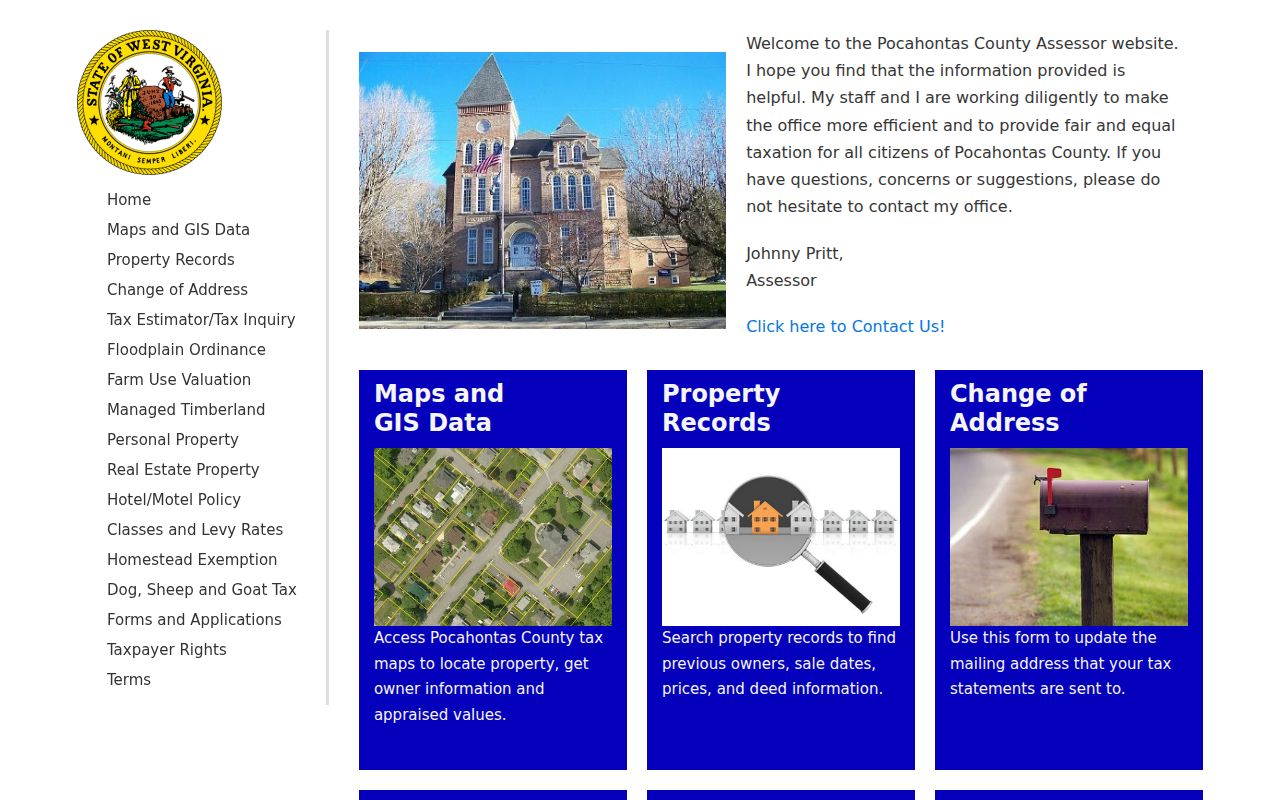
Save the exact parcel identifier and deed reference before moving between portals. Each search may label those fields differently.
Pocahontas County Property Records and July Assessment Timing
The county tax-map notice says its current data was collected July 1, 2025. That data is for 2026 assessments. That date matters. A deed recorded later may already name a new grantee. But the ordinary assessment display still reflects the July snapshot. The notice points users to a parcel's “View Mapcard (Sales History)” PDF. It covers sales after July 1. That mapcard bridges the annual roll and later transfer information. It does not replace the recorded deed.
A recent purchase may show in one system but not another. Keep both dates in view. The assessment date answers what the roll reflected for that cycle. The clerk's instrument date and recording reference answer what entered the land records. A current-owner question should compare them rather than assume one screen is wrong. A West Virginia tax-rule page explains the July 1 valuation and ownership date. It also covers the February 1 start of the county appeal period.
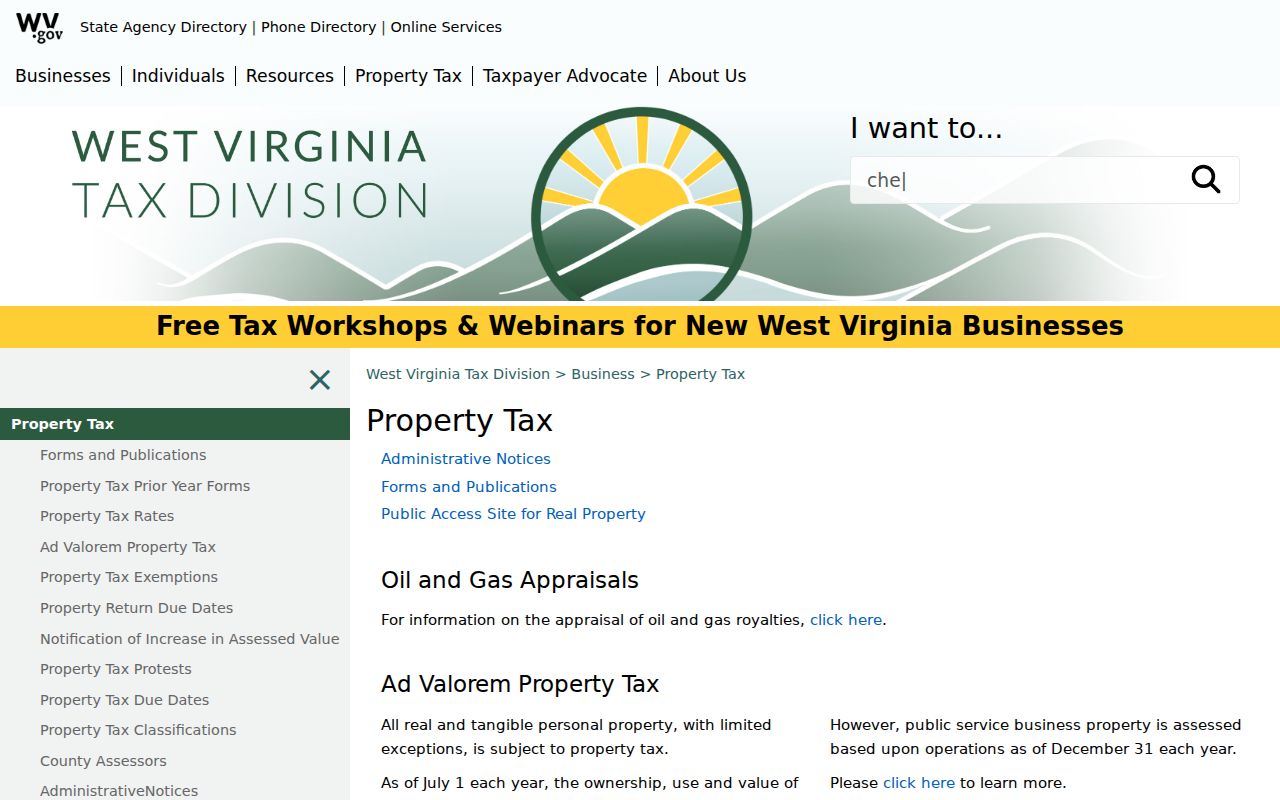
This timing detail matters most for transfers near the assessment date. It also helps anyone reconciling an owner field with a recent sale.
County Clerk Categories in Pocahontas County Property Records
The WV Land Records landing page lists deeds and deeds of trust. It also lists judgments and other liens. The categories extend to releases, church trustees, cemetery deeds, restricted military discharges, foreclosure trustees' reports of sale, plats, assignments, agreements, and affidavits. That is broader than a simple deed list. A release may show a lien was cleared. A plat may identify a lot layout. An affidavit or assignment may explain a change in an interest. Restricted military discharge records sit apart from ordinary public land instruments.
The Pocahontas online land-record page gives categories. It does not state the earliest searchable year, full field syntax, or image price. The County Clerk's own notice says deeds are now available online. Access runs through its linked image-search endpoint. Treat the online index as a lead. Verify the actual instrument and book/page before relying on it.
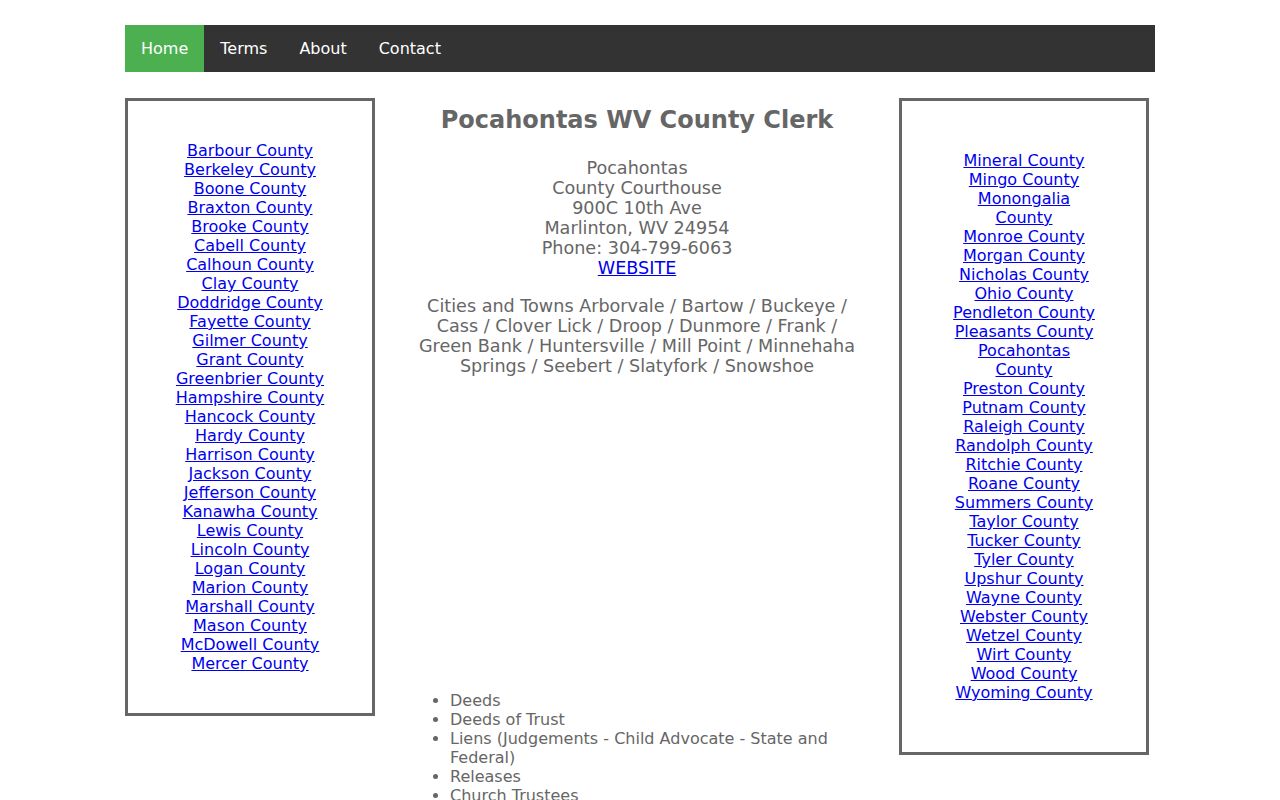
Chasing an older chain or a missing deed image? Ask the Clerk whether that volume rests in the courthouse records room or survives in another county-held format.
Requesting a Pocahontas County Deed by Book and Page
A deed request to the Pocahontas County Clerk works best when it is specific. Name the book and page. Add the document type. Say how you want the record delivered. Payment goes by credit or debit through the linked state service. Records can arrive by mail, email or fax. Vital and certified documents go by mail only. The office sits at 900 C 10th Avenue in Marlinton, and weekday hours run 8:30 a.m. to 4:30 p.m., excluding state and federal holidays. Phone numbers differ between county pages. The official clerk contact page lists 304-799-4549, while the land-record landing page shows 304-799-6063. Trust the contact page. Call ahead to confirm service before making the trip. The clerk publishes no online index start year and no image fee, so check with staff before assuming an older deed can be downloaded at a set price. Give the parcel's legal description and a party name along with any book and page reference. That context helps staff separate same-name parties and similar tract descriptions. It saves everyone a round trip.
Tax Inquiry Fields Behind Pocahontas County Property Records
The Sheriff/Treasurer WEB Tax Inquiry tracks a full working set of billing fields. Those fields cover Pocahontas County parcels. Years, type, ticket, name, account number, map-parcel, description and billing address all appear. Totals paid, billed and due sit side by side. The map-parcel key ties a tax ticket back to the Assessor card. The billing address can differ from the physical situs. Use the account, year and ticket together. That keeps a payment history attached to the right parcel. The official WEB Tax Inquiry page also serves as the county's tax payment route. It puts a tax-search and payment interface on one screen. Payment processing may add a card fee. Check the payment screen before you submit. Remember that a tax balance is a billing fact. It is not proof of ownership or a full title search.
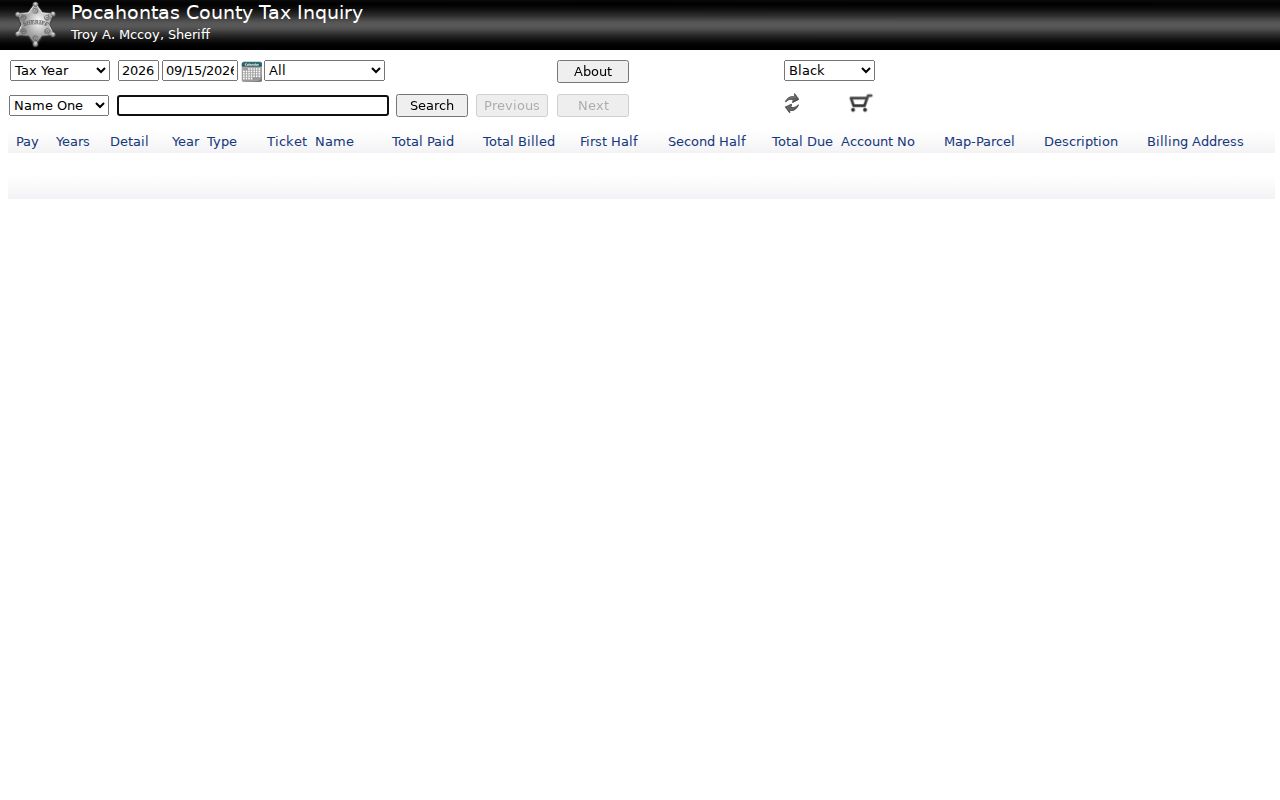
For tax detail, read the ticket and tax year together. Then compare the parcel key and billing address against the assessment card before drawing conclusions.
The Main Types of Pocahontas County Property Records
One parcel, several record systems. Each Pocahontas County office answers a different question. A deed shows the instrument accepted for recording. The assessment roll describes the taxable property and its owner field. The tax inquiry follows bills and payments, while map layers fix a parcel's tax-map location. Compare these sources freely; none replaces another. The Assessor says its search can surface prior owners, sale dates, prices and deed information, and the Clerk's index lists instruments such as deeds, liens and plats.
| Record Type | What It Documents | Kept By | Access |
|---|---|---|---|
| Deeds and related instruments | Transfers, deeds of trust, releases, liens, assignments and affidavits | County Clerk | Index online; coverage and image costs need confirmation |
| Assessment card | Owner field, parcel traits, appraisal, sales and deed references | County Assessor / WV Assessment | Public search and parcel tools |
| Tax account | Tax year, ticket, billed and paid amounts, map-parcel and billing address | Sheriff / Treasurer inquiry | Public WEB Tax Inquiry |
| Tax maps and plats | Parcel location, map identifiers and recorded subdivision references | County mapping tools / Clerk | Free viewer; not a boundary survey |
| Permits and zoning | Town land-use or building file, if held locally | Town office | No official town lookup was located |
Pick the tool that fits the question. Use the deed index for an instrument or transfer. The assessment search carries parcel and value fields. WEB Tax Inquiry holds the billing history. For a parcel map, turn to the statewide WV Property Viewer or Pocahontas Tax Maps, and read their disclaimers before relying on a line. The Pocahontas County deed records guide walks through the Clerk's categories and request route, while the tax page covers bill fields and the assessment calendar.
Delinquent Land and Auditor Notices in Pocahontas County
Unpaid real-estate taxes can push a parcel into a state land-sale process. The West Virginia State Auditor's County Collections tools search land certified to the state. They also cover parcels handled by the deputy land commissioner. Related pages hold legal notices and bidder pre-registration. These are separate from the Sheriff's routine WEB Tax Inquiry. Use the tax account for bills and payments. Turn to County Collections when the question concerns a delinquent parcel or a state sale. The search screens include sale-status and tax-year filters. The Auditor posts no active Pocahontas listing. So a portal's existence never means a particular tract is currently offered. Before acting on any notice, confirm the legal description, tax year, sale stage, payment instructions and current status. Do this with the Auditor or the county custodian. The State Auditor's County Collections search provides the official statewide route. Bidder registration and legal-notice pages use separate forms. Read each for its own requirements.
Pocahontas County Property Records on Tax Maps Are Not Surveys
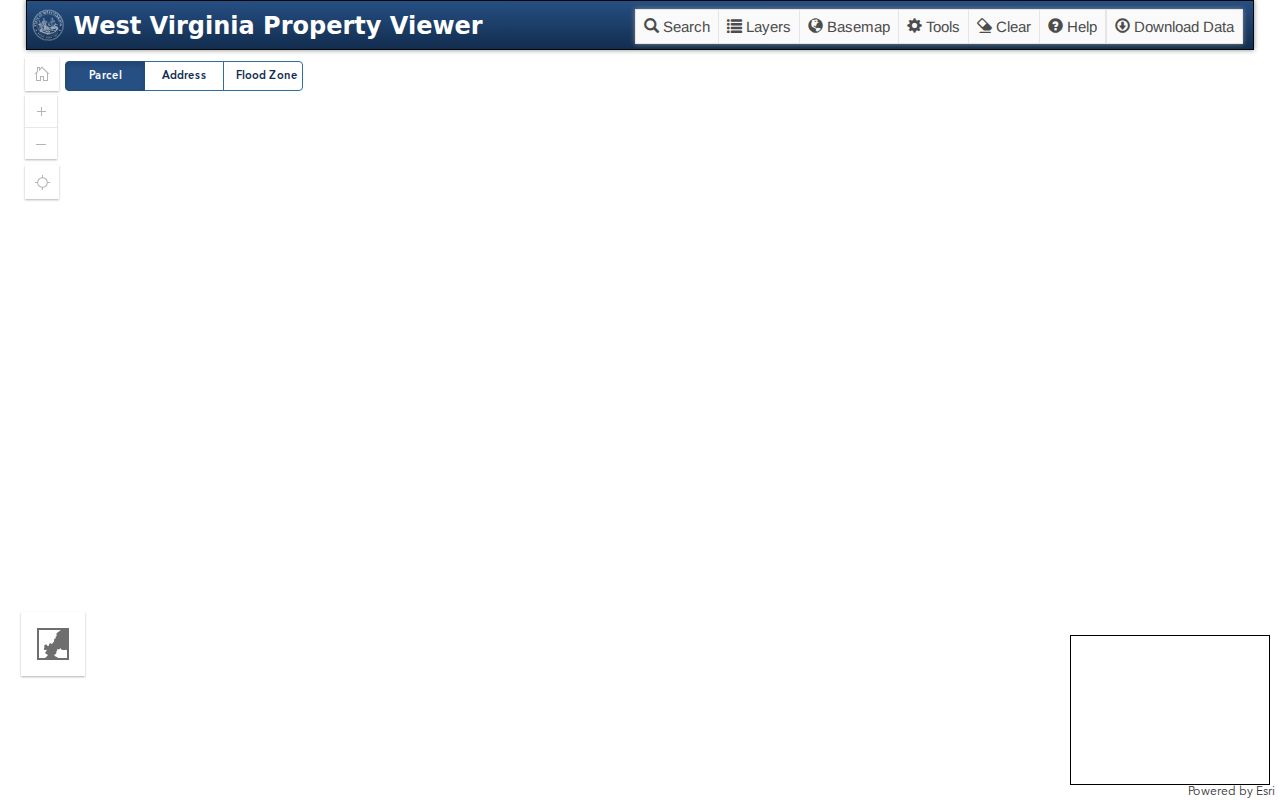
The Pocahontas Tax Maps ArcGIS viewer and the statewide WV Property Viewer both help locate parcel geometry. They also surface physical addresses and parcel attributes. The statewide tool offers address, owner, parcel, geometry and coordinate modes. Its detail panel links to more parcel information. The local map notice is blunt. A tax map is a reference tool. Its lines are not a valid survey plat. In a boundary dispute, treat the map as a clue to the parcel record. It is not a field measurement. The statewide tool supports exports such as CSV and KMZ. Its E-911 address search rejects rural routes and post-office boxes. A failed address lookup may be an addressing mismatch rather than a missing parcel. Try the Assessor's street, owner, map, parcel or legal-description fields instead. Then open parcel detail for information the owner label omits.
Need a recorded lot layout? Search for a plat in the Clerk's deed index, then compare its legal description with the tax-map card.
Physical and Mailing Addresses on Pocahontas County Records
A parcel in Pocahontas County can carry two addresses. Each does its own job. The E-911 physical address locates the land, while the mailing address routes bills and notices to an owner or representative. Those lines can disagree without any record being defective. The statewide viewer may display only one owner in its first result, so open parcel detail before treating that line as a complete ownership list.
The assessment system adds owner-name and mailing-address search fields. The Sheriff's tax table carries a billing address. Rural routes and PO boxes are poor stand-ins for a situs address in the statewide viewer. When a search misses, try street name, map or parcel number, legal description, or owner. Keep the address label each portal returns. Do not merge a postal city, a mailing line and a municipal boundary into one location. That care matters in Pocahontas County, with its small towns and broad rural stretches.
Assessment Classes and Value Clues in Pocahontas County
West Virginia generally assesses property at 60 percent of fair market value. The valuation date is July 1. Ownership, use and value are set then for the next calendar tax year, and state tax material describes an annual assessment with a three-year physical-visit cycle. Class II covers qualifying owner-occupied residential property. Classes III and IV split other property by location and use. That includes property outside municipalities. A parcel's class can change the tax math without touching its deed.
Programs matter too. The Assessor handles homestead exemption, farm-use valuation, managed timberland, floodplain determination, personal-property filing and a tax estimator or inquiry. A floodplain determination must be filed before structures. These programs explain why two similar parcels can carry different taxable figures. A tax value is not an appraisal or a current sale estimate. Bill, program and appeal details belong with the Sheriff and Assessor records. The overview stays on the connections between record sets.
History Sources for Pocahontas County Property Records
Old land research rarely ends at a current portal. The Pocahontas County courthouse records room archives deeds, marriages and births. McClintic Library's Heritage Room holds local-history materials in-house. It is kept with the Historical Society and Genealogy Group. The Pocahontas Times is digitized. Patrons can search it. The library also offers in-library Ancestry access. It may offer WV Info Depot from home with password information. The Historical Society's archive and museum preserve context for families, logging and railroad history.
The library collections page describes the Heritage Room and its local resources. Printing there costs 20 cents per page. These sources offer clues, not conclusions. They can suggest a name, a date or a neighborhood lead. Old newspapers help. For the land transfer itself, the deed and plat remain the evidence. Match a notice or family lead to the legal description and instrument reference. Do this before concluding anything about ownership.

A certified birth, death, marriage or divorce record comes from the state Vital Registration office. The courthouse records room also archives selected local vital material. The West Virginia Vital Registration copy page lists a $12 certified-copy fee. Mail and walk-in routes are both listed. Pair any vital record with the legal description. Do this before drawing an ownership conclusion. Clues are not deeds. Each source answers a different question.
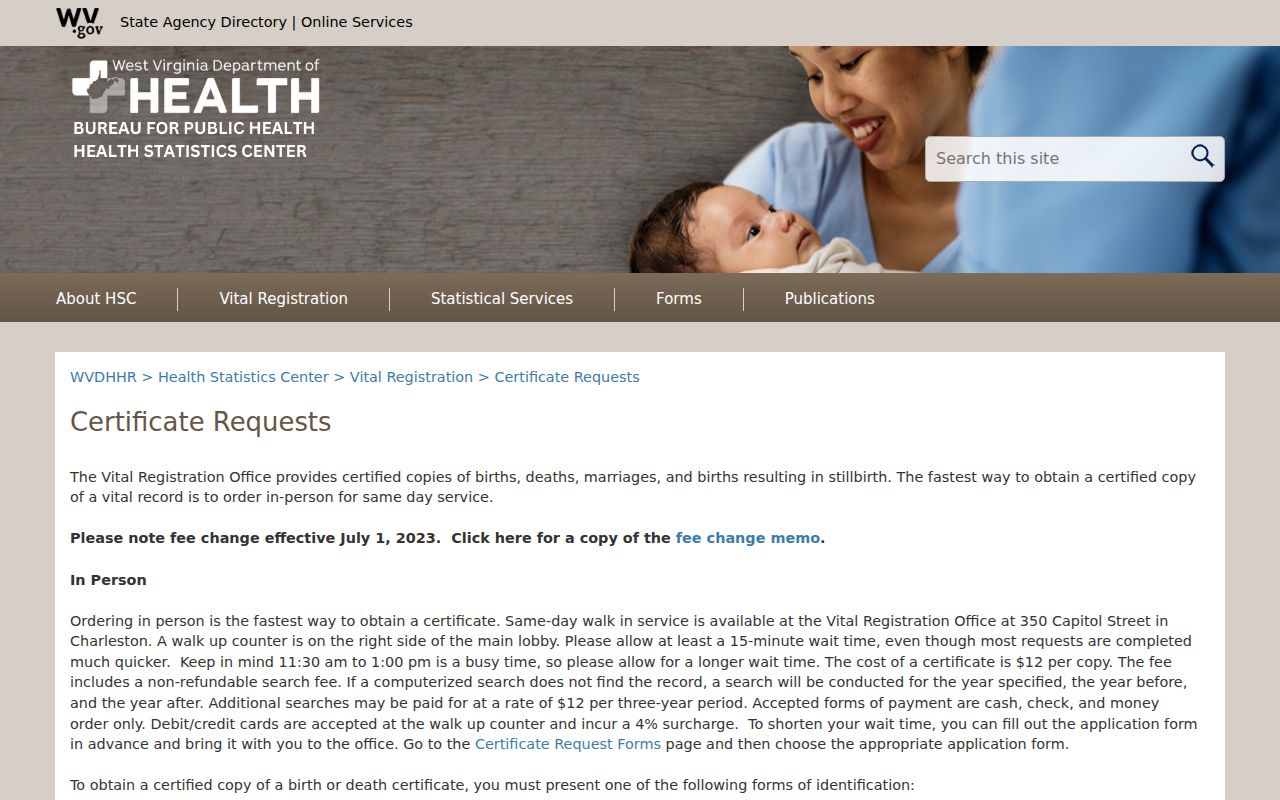
Mail requests need the application, a color copy of identification, and a check or money order. A same-day walk-in route is listed in Charleston.
Address Confidentiality and Public Property Records
West Virginia's Address Confidentiality Program gives qualifying victims of domestic violence, sexual assault, stalking and human trafficking a substitute address and mail forwarding. The Secretary of State administers it. Applicants use an approved victim-service application assistant. Participation runs four years. This is a safety program, not a property-search filter. It also reminds us that an address in a public source deserves care.
Never try to defeat a protected address. Never use public records to contact or target a person. A substitute mailing address leaves the legal description and the deed's custodian unchanged. For a lawful ownership question in Pocahontas County, rely on the office that holds the record. Limit what personal details you repeat or share.
When a Pocahontas County Online Search Comes Up Short
An empty result is not a dead end. The record may sit in a drawer. When an online index comes up short, take the parcel card to the public counter instead of hunting for a hidden portal. Pocahontas County's Clerk and Assessor both work from the courthouse complex on Tenth Avenue in Marlinton. The Clerk can retrieve a paper volume, a book and page, a deed image, or an entire document category. The Assessor can walk through a parcel's map, class, legal description, or valuation field. Each office holds a different piece. Court files belong to the Circuit Clerk, which publishes no public case-search link, so ask the counter about its review procedure.
A narrow written request works when a visit cannot. Under the West Virginia Freedom of Information Act, an agency should respond as soon as practicable and within five days, excluding weekends and legal holidays. Copies may carry a reproduction charge. The labor of searching is not billed. Give the office a narrow date range, the record type, a parcel description, and a preferred delivery method. That speeds everything up. No law guarantees that a record exists.
What Pocahontas County Property Records Can Confirm
Pocahontas County property records are proof of what an office wrote down, nothing more. A deed names a grantee. The tax roll shows a value and a balance. A plat or GIS map ties a parcel number to a mapped shape. Those facts are solid as recorded facts, but they have limits. Ownership can change hands before the roll catches up. An online deed index may skip older images entirely. Boundary lines, market price, and building compliance sit outside what property records alone can prove. For title or boundary questions, rely on the custodian. A professional record review also beats a single document.
Lawful use. Use Pocahontas County property records for property research, ownership due diligence and civic questions. Do not use owner information to stalk, harass or harm a person, and do not treat a tax map as a survey or a records search as title insurance.